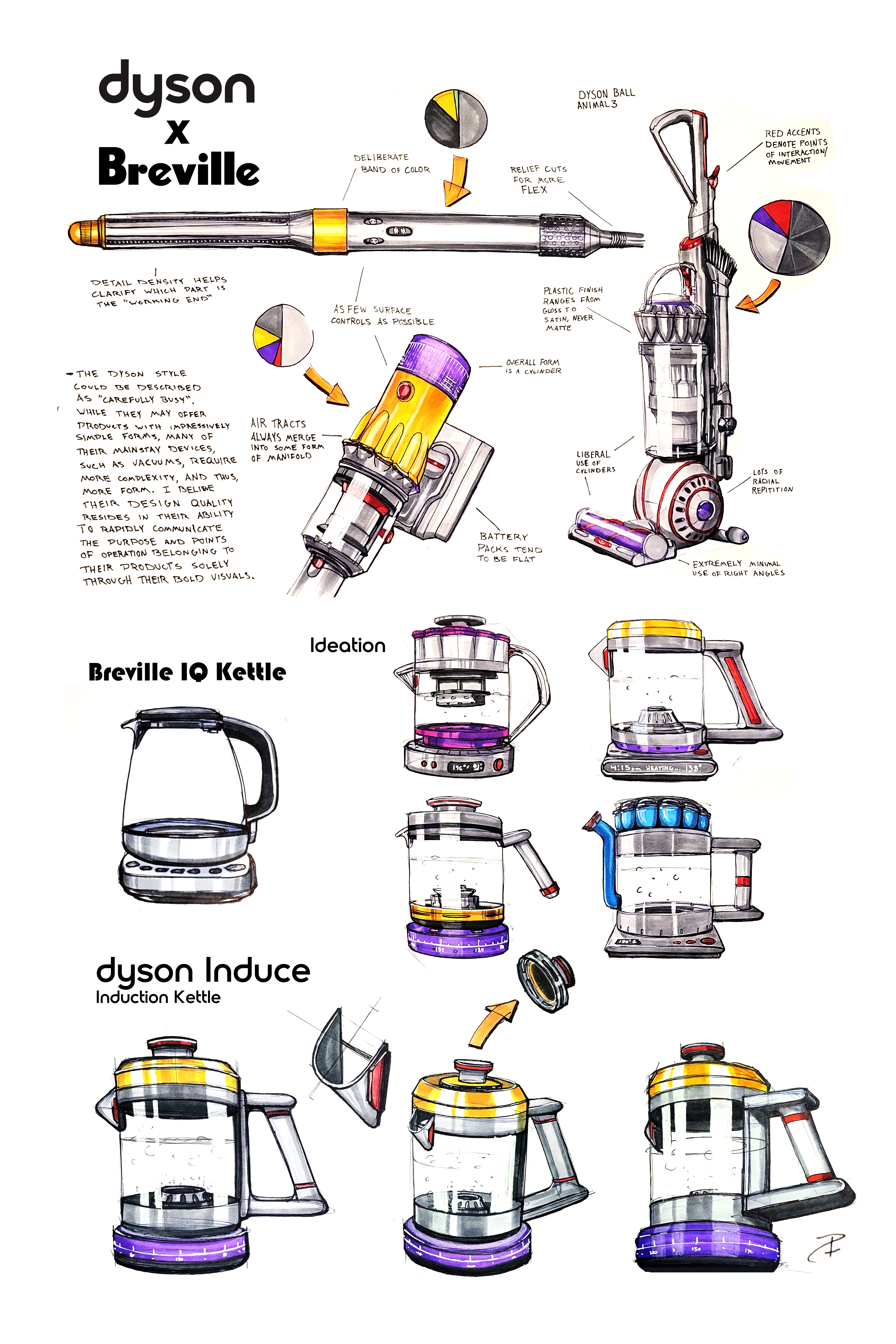
To better understand Dyson’s design language, I began with a focused sketch study of Dyson products. This exercise helped identify recurring themes such as aerodynamic forms, visible functional elements, and a balance between technical precision and sculptural simplicity.
Building on these insights, I explored how Dyson’s visual language could be integrated with Breville’s approach to product design. After reviewing Breville’s product lineup, I selected the IQ Kettle as a starting point for its clean, minimalist form and soft, semi-organic curves. Through iterative sketching, I experimented with form, surface details, and color to create a range of concepts. Each iteration revealed unique strengths, which informed a final synthesis combining the most successful elements into a cohesive concept. The resulting design, titled Dyson “Induce,” represents a thoughtful blend of both brands’ identities.
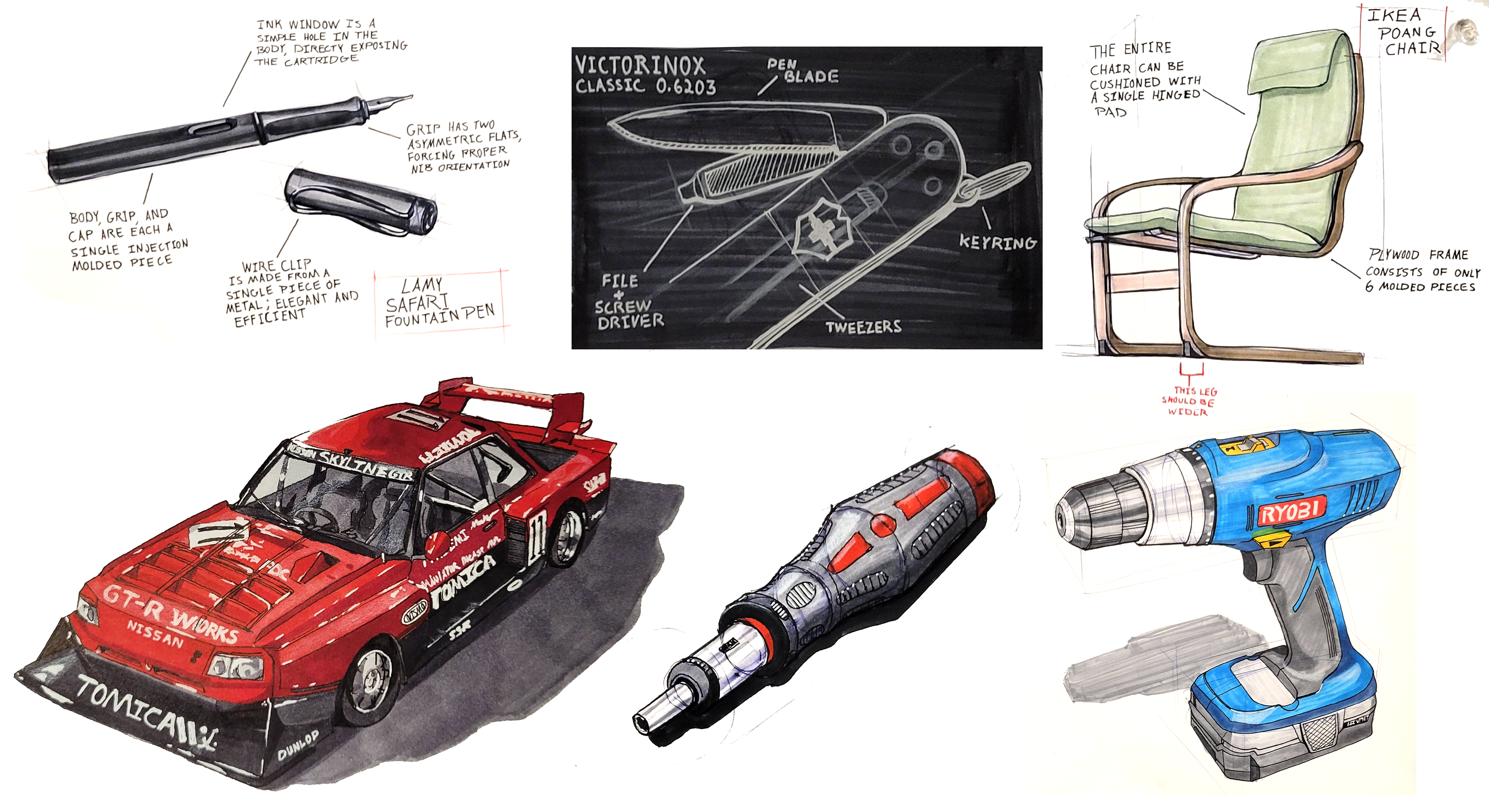
A collection of sketch studies performed for our Visual Strategies course
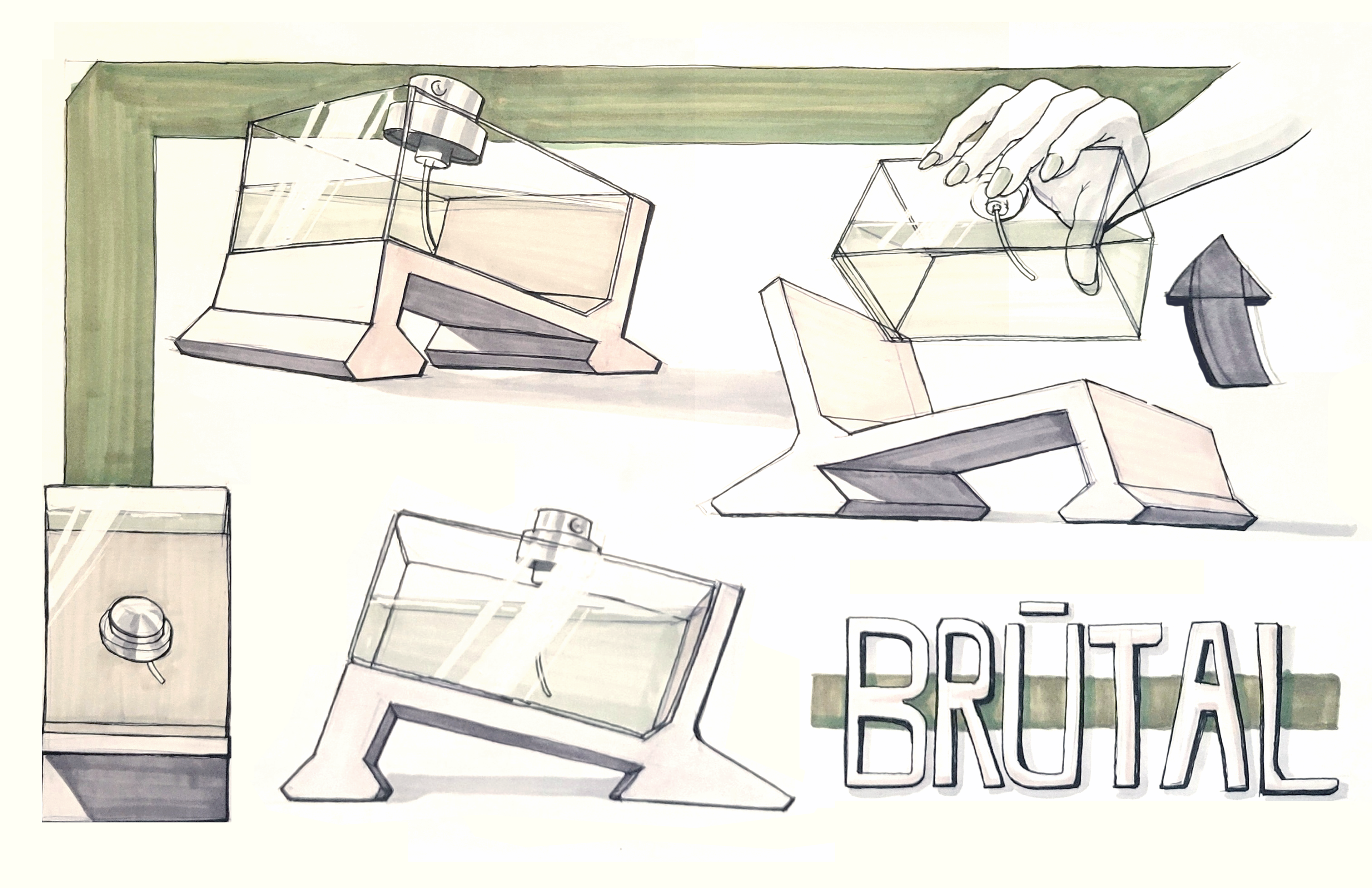
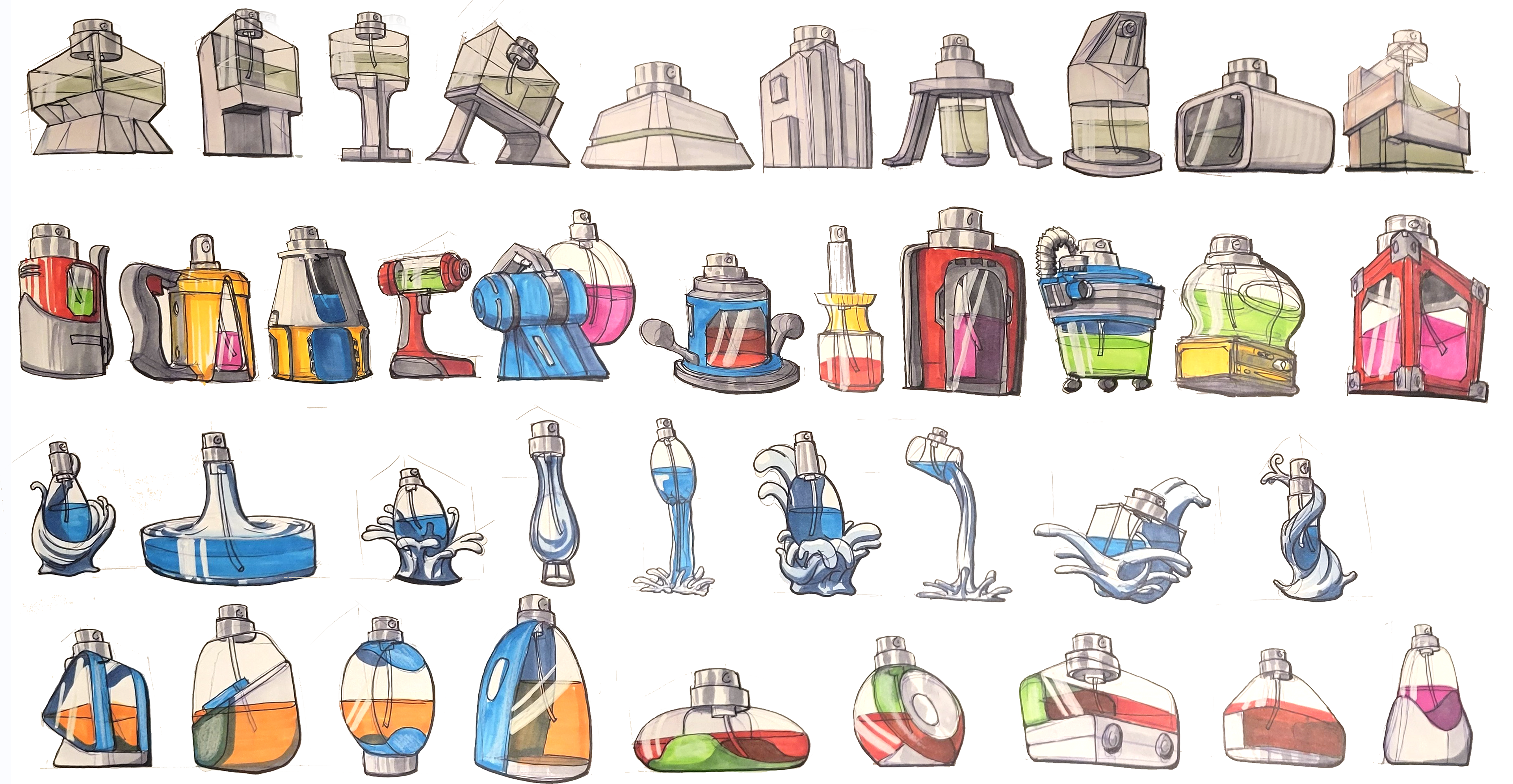
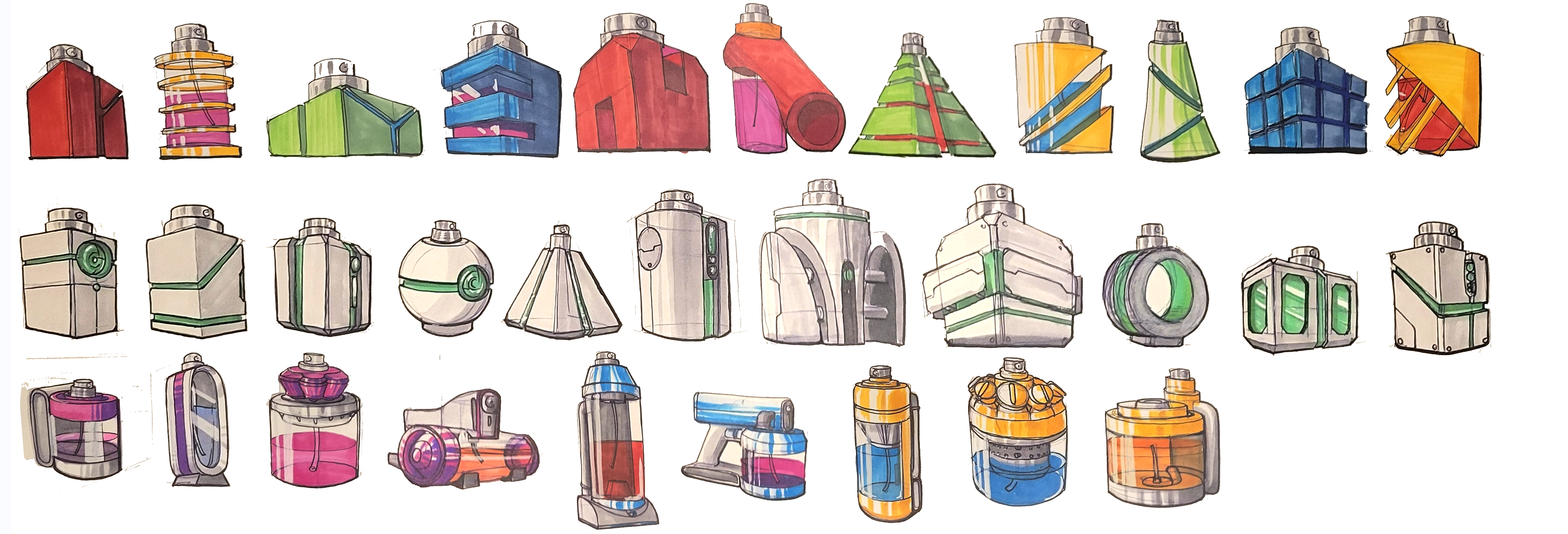
As an iterative ideation exercise, I generated 81 unique fragrance bottle concepts, organized into themed sets of approximately nine that shared common forms, motifs, and design language. Through evaluation and refinement, one concept was selected for further development: a Brutalist-inspired form emphasizing mass and geometry. The final design was then illustrated in a composed scene, presenting the bottle in a sketch-style advertisement to communicate scale, material presence, and brand character.
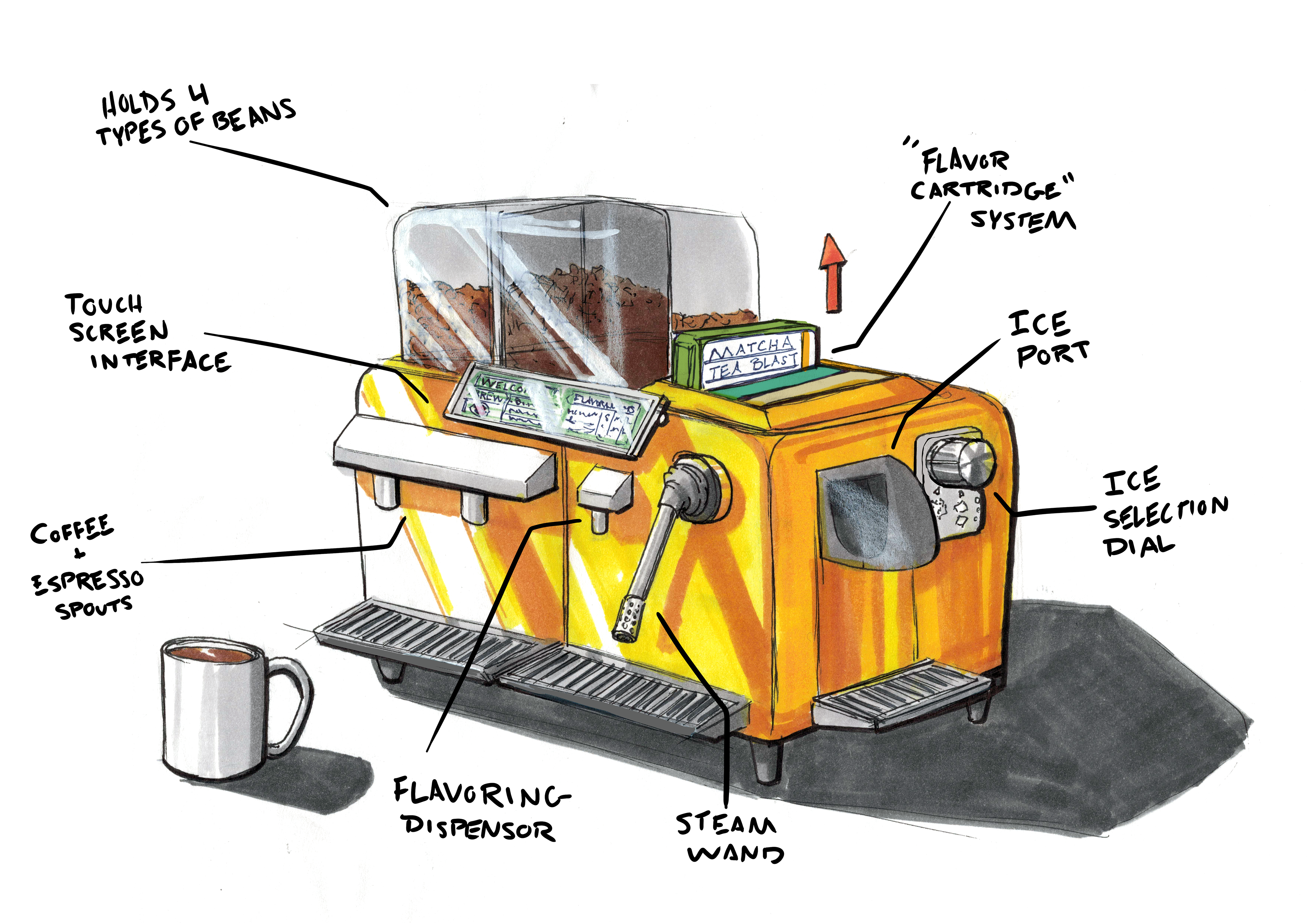
As part of a collaborative research project, we studied at-home coffee brewing behaviors through user surveys and observational research. Insights showed that users wanted café-quality drink flexibility in a home system. Based on these findings, we defined key features including multi-bean brewing (such as espresso), integrated flavoring options, and temperature control via steaming and ice. I led the final concept visualization, producing detailed illustrations with callouts to clearly communicate functionality and user experience.
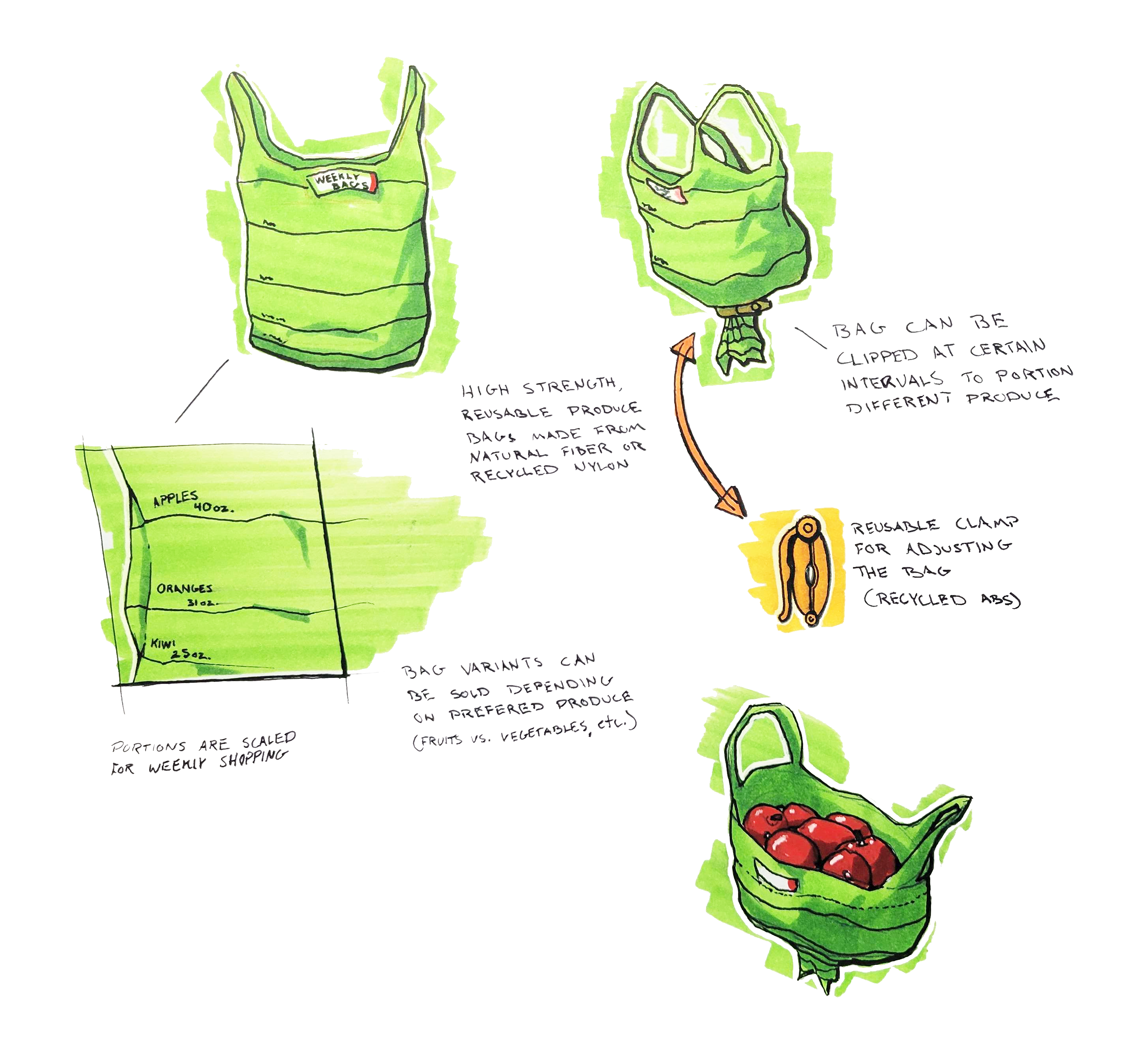
After my team won the 2025 OSU Industrial Design Charette, we were sent to New York City to compete in the Wanted Design workshop. We were tasked with proposing a solution to support local food systems. I focused on household food waste, designing a modular, reusable produce bag with premeasured volumes printed on the surface. A reusable clamp cinches the bag to the desired size, creating a tangible target amount to help households buy, store, and use produce before it spoils.